FOODSERVICE & HOSPITALITY OPERATORS WITH MULTIPLE LOCATIONS
The lunch rush is not the moment for a blank menu board. Digital signage in foodservice and hospitality has zero tolerance for downtime and neither do we. 99.9% uptime, centrally managed, every location.
Request a free consultationRead our DMU-approach
5000
+
Screens managed
99.9
%
Uptime
70
%
NL DOOH market
1
SPOC
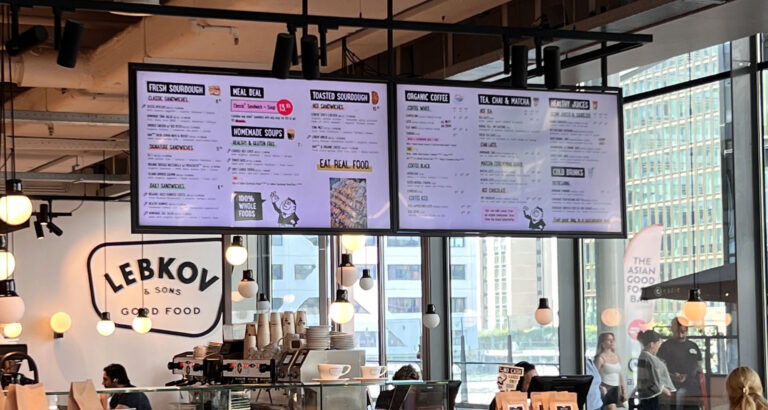
Lebkov & Sons • Jaarbeurs Utrecht • La Place • Foodvillage • Airport Schiphol • VodafoneZiggo • Hoog Catharijne Utrecht •
Lebkov & Sons • Jaarbeurs Utrecht • La Place • Foodvillage • Airport Schiphol • VodafoneZiggo • Hoog Catharijne Utrecht •
Lebkov & Sons • Jaarbeurs Utrecht • La Place • Foodvillage • Airport Schiphol • VodafoneZiggo • Hoog Catharijne Utrecht •
THE CHALLENGE
A blank menu board during the lunch rush
Food and hospitality environments are always on. Screens in kitchens, counters, lobbies and queuing areas need to run reliably. In heat, humidity and at high traffic volumes, without anyone on-site having to troubleshoot hardware.
01
Menu boards that fail at peak service
A screen that goes blank at 12:30 creates guest confusion, staff pressure and lost upsell. The instinct is to tape a printed A4 to the counter, which is precisely the scenario your investment was meant to prevent.
02
Menu updates that take days, not minutes
Seasonal items, price adjustments, allergen changes. A menu update that requires someone to drive to each location, or wait for the IT team, means screens show the wrong information for days at a time.
03
Multiple sites, no central view
A hotel group with 40 properties. A QSR chain with 150 locations. Without central monitoring, you have no idea which screens are showing what and which ones have been dark for three hours.
THE PEOPLE BEHIND THE DECISION
One decision, seven realities
At a foodservice organization like Lebkov & Sons, network decisions are rarely made by just one person. We’ve profiled the seven people who really matter: their roles, their ambitions, and the challenges they face every day. Not to sell to them. But to understand them.
SCALE
5-500+ locations
APPLICATION
Menu boards, upsell & guest experience
DECISION TIME
4–14 months
PARTIES INVOLVED
Seven key roles
TECHNOLOGY & INTEGRATION
CTO / IT manager
ROLE
Manages the IT infrastructure across locations (networks, devices, security policies) and is accountable for ensuring every screen on the estate is a managed, auditable endpoint rather than an unmonitored device.
AMBITION
Screens that sit within the company’s IT governance framework (auditable, secure, remotely manageable) without requiring a dedicated IT resource at every location to keep them running.
CHALLENGE
Consumer-grade hardware on public-facing displays, devices with no central access control or audit logging, and a growing estate that increasingly resembles shadow IT visible on the network, invisible to IT management.
OPERATIONAL CONTINUITY
COO / Operations
ROLE
Responsible for the daily running of every location from opening procedures and staff deployment to supplier escalations and service recovery when something goes wrong mid-service.
AMBITION
Locations that run without operational surprises. Screens that are simply on, showing the right content, without a support ticket or a site visit pulling the ops team away from running the business.
CHALLENGE
Menu boards that fail during peak service, locations where no one on-site can troubleshoot, and supplier escalations that involve three parties pointing at each other while the screen stays dark.
FINANCIAL PREDICTABILITY
CFO / Finance
ROLE
Signs off capital investment in digital infrastructure and owns the multi-year cost model, including maintenance, service and replacement costs that rarely appear in the original business case.
AMBITION
A predictable cost per location (hardware, installation, management and service) with a transparent TCO model that holds up across the contract lifecycle without hidden charges disrupting the annual budget.
CHALLENGE
Emergency screen replacements not budgeted for, service calls billed at rates outside the original contract, and a business case that looked solid at purchase but quietly erodes over three years of unplanned costs.
STRATEGY & GROWTH
CEO / Executive Board
ROLE
Sets the direction for the estate: new location openings, format evolution, international expansion, and the digital guest experience that defines the brand for the next five years.
AMBITION
A screen network that is a genuine commercial asset. Driving upsell, supporting retail media revenue, and scaling internationally without each new country becoming a separate infrastructure project.
CHALLENGE
Operational screen issues that consume management attention and delay strategic decisions, and a digital signage investment justified as revenue-generating that has so far delivered mainly support tickets.
BRAND & CUSTOMER EXPERIENCE
CMO / Marketing
ROLE
Owns the brand, the guest experience, and commercial communication across all channels, including every screen guests encounter at the counter, in the queue, and in the lobby.
AMBITION
Campaigns that go live across all locations simultaneously, content that adapts by daypart and season without a logistics operation, and a consistent brand experience whether a guest walks into location one or location two hundred.
CHALLENGE
Long lead times between creative sign-off and on-screen rollout, franchise locations showing outdated or off-brand content, and no visibility into which screens are actually playing the right thing at the right time.
SUPPLIERS & CONTRACTS
Procurement
ROLE
Manages supplier selection, contract terms and ongoing vendor performance. Balancing cost efficiency, service quality and the commercial risk of single-vendor dependency across a multi-location estate.
AMBITION
One contract, one SLA, one counterpart accountable for the complete picture (hardware, software and service). Vendor consolidation that reduces administrative overhead without creating unacceptable lock-in.
CHALLENGE
Multiple supplier contracts that each define responsibility differently, SLAs with exceptions that protect the vendor more than the client, and hardware warranties that expire at different times across a heterogeneous estate.
THE SEVENTH - OFTEN FORGOTTEN
The internal ambassador
ROLE
The person who has seen the problem first-hand (a blank board on a Friday lunch service, a campaign that played in 40 of 120 locations, a support call no one resolved) and decided something had to change. Often a COO, marketing director or head of operations who becomes the project owner from the inside.
AMBITION
To build a credible internal case: a clear brief for procurement, a TCO model for finance, an uptime and security answer for IT, and a commercial narrative for the CEO. To lead the project across the finish line without it dying in committee.
CHALLENGE
A CFO who remembers the last screen investment that underdelivered, an IT team cautious about another unmanaged device class, and a CEO who will only commit when every objection has been answered. The advocate needs a partner, not just a vendor, someone who helps them win the room.
REFERENCES & CASES
Where screens work hardest in your operation
From quick-service restaurants to hotel groups and leisure venues, the environments are different; the requirement for reliability is identical.
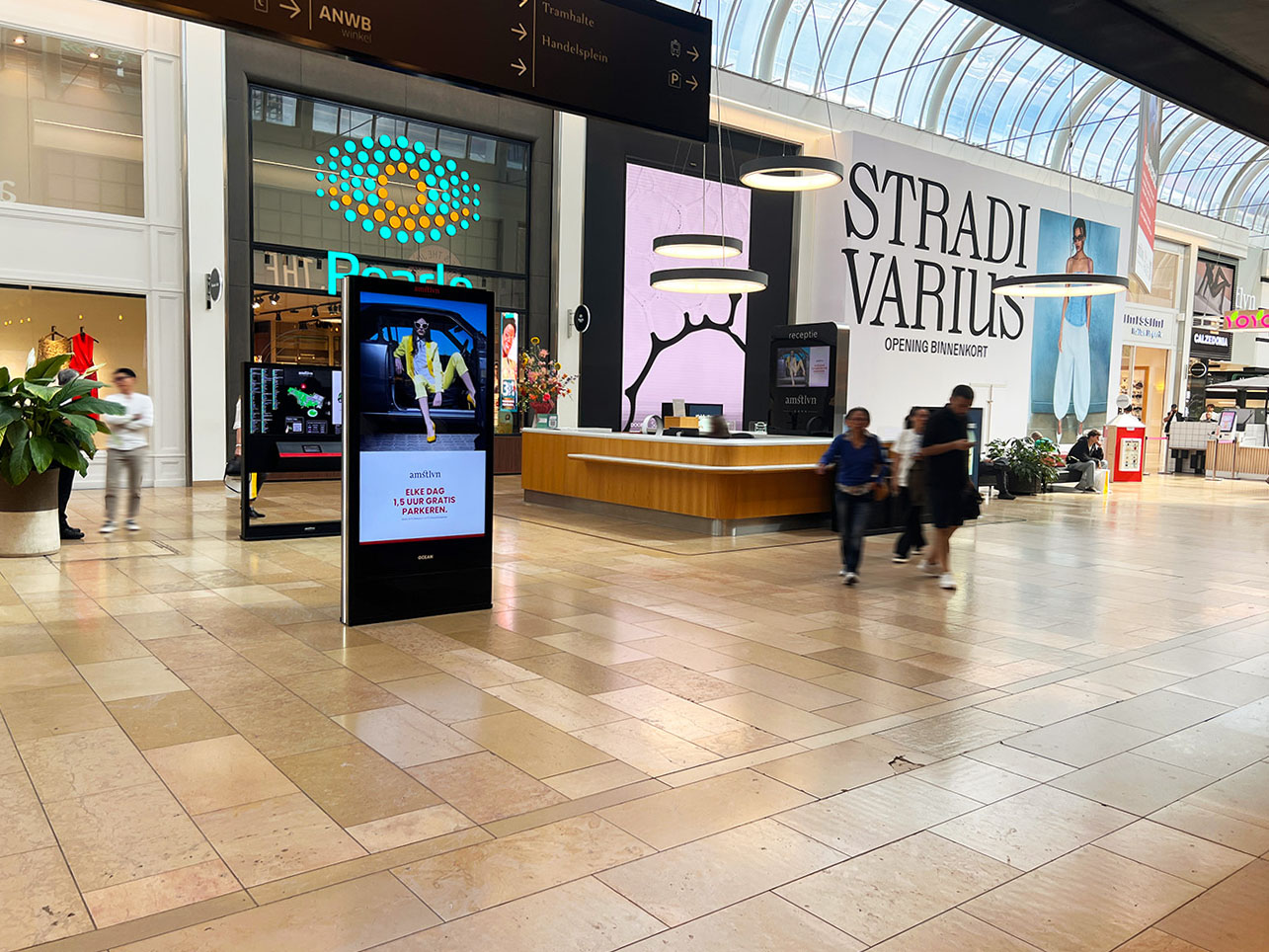
Stadshart Amstelveen
Stadshart Amstelveen
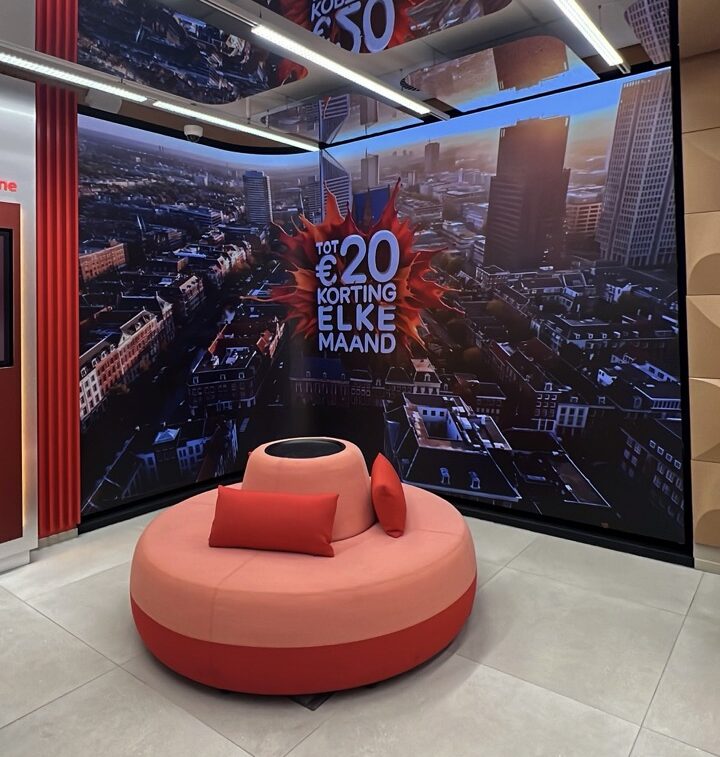
VodafoneZiggo
VodafoneZiggo
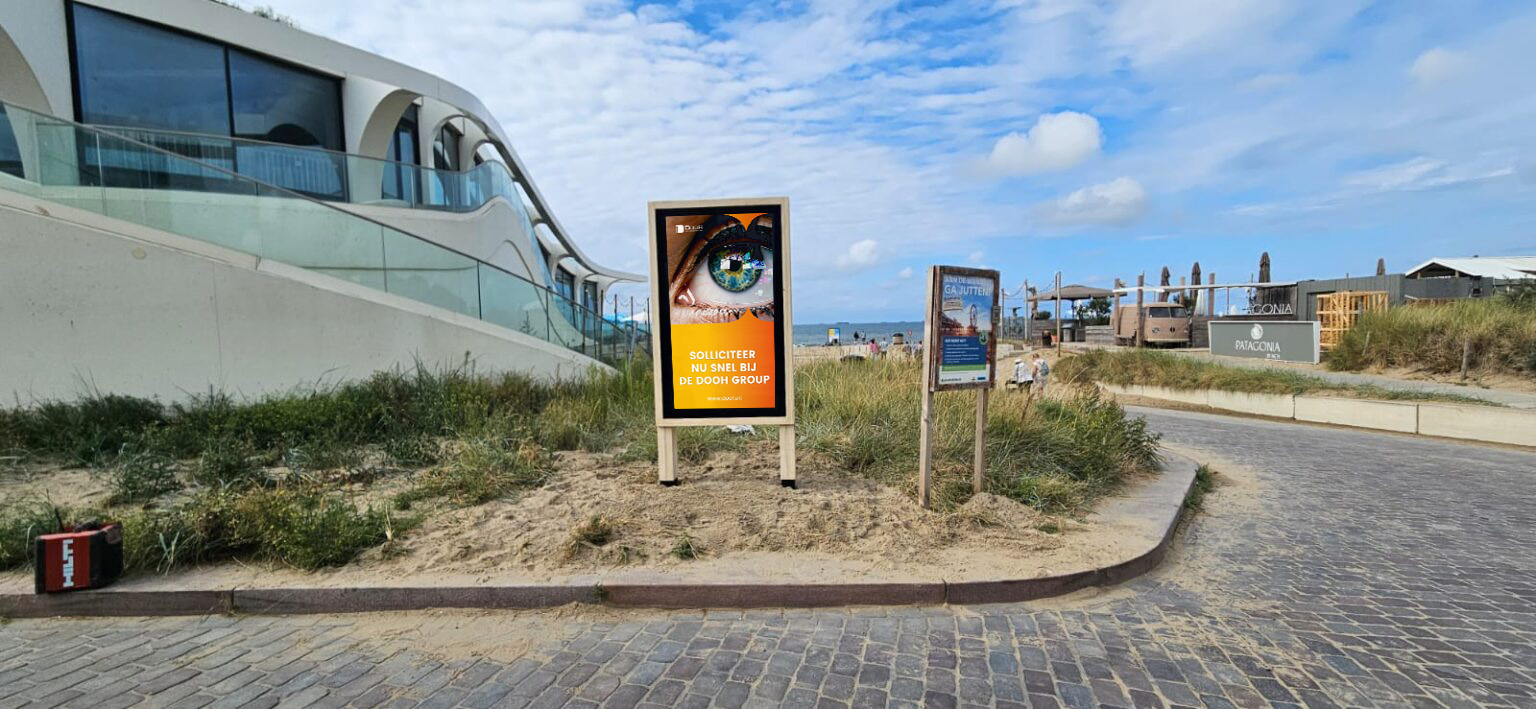
Scheveningen Beach
Scheveningen Beach
OUR FOUNDATION
One homogeneous network. No piecemeal solutions that just don’t quite fit together
In foodservice and hospitality organizations with dozens or hundreds of locations, digital signage rarely fails all at once; rather, it breaks down gradually. A screen here, an incorrect menuboard there, a product launch that doesn’t go live in 40% of the locations. The problems are systemic, not isolated incidents.
Self-Healing Platform
A software layer that detects and autonomously resolves incidents before they have an impact. Our uptime guarantee.
Single Point of Contact
One provider for playback, hardware, and software. No more “it’s the other supplier’s fault”, ever.
Safe & Secure Remote Management
SSRM enables full remote control of devices across your entire network. All components are continuously monitored from one central infrastructure.

OUR SOLUTION
One system, every location, always on-brand
DooH Group delivers the complete package: hardware, software, installation, and ongoing management, built specifically for the pace of food & hospitality.
Digital menu boards
Samsung commercial displays specified for your environment, from quick-service counters to fine-dining ambient screens. Portrait, landscape, and video wall configurations.
CMS Peach: real-time control
Push menu updates, allergen changes, pricing, and promotions to every location in seconds. Schedule dayparting (breakfast, lunch, dinner) automatically per location or chain-wide.
24/7 Monitoring & support
Proactive remote monitoring means we know about problems before you do. 99.9% uptime SLA backed by a real support team in the Netherlands.
Sustainable & energy-conscious
Smart scheduling dims or sleeps screens during off-hours. Energy-efficient hardware selection reduces your carbon footprint without compromising brightness or colour accuracy.
OUR APPROACH
Reliable screens: one update, everywhere
We don’t just sell screens. We engineer solutions: choosing the right quality, format and technology for your specific situation.
01
Free intake
We visit your locations, map your content workflow, and define hardware requirements together.
02
Design & templates
Brand-aligned screen templates, daypart schedules, and CMS Peach setup, ready before install day.
03
Installation
Certified engineers install out of hours to avoid service disruption. All cabling, mounting, and network setup included.
04
Go live & train
Your team gets trained on CMS Peach. First campaign and menus loaded. You’re live and in control.
05
Monitor & optimise
24/7 remote monitoring, proactive maintenance, and content performance reviews every quarter.
Always included
Every project, regardless of size, comes with these non-negotiables.
99.9% uptime SLA
24/7 monitoring
Free onboarding
Integrations & platforms
CMS connects with your existing tools so signage becomes part of your operation, not a silo.
Broadsign
CMS Peach
REST API
Custom integrations
CONTACT
Ready to make every screen serve your guests?
Book a free 30-minute consultation. We’ll walk through your locations, your current setup, and what a realistic deployment looks like. No obligation, no sales pitch.
FREQUENTLY ASKED QUESTIONS
Foodservice & hospitality questions answered
IT / CTO
Does digital signage add another unmanaged device class to our network?
No. Every screen we manage is a fully managed, auditable endpoint under our Safe & Secure Remote Management (SSRM) framework: role-based access, encrypted traffic, and audit logs available on request. Screens connect via a secure outbound connection: no inbound firewall rules, no VPN tunnels, no changes to your core infrastructure.
Is DooH Group's platform GDPR compliant? Can our IT team approve it?
Yes. The platform uses no facial recognition and captures no personal data. DooH Group applies the SSRM security framework to all managed networks and provides a full security whitepaper and data processing agreement for IT pre-qualification.
Can the CMS integrate with our POS, menu management, or kitchen systems?
Yes. Our CMS platforms offer REST API connectivity for dynamic menu data, pricing, and availability. Price and product changes in your source system can flow through to the screens automatically. Custom integrations are scoped during onboarding and delivered as part of the managed service.
COO / Operations
What happens if a menu board goes blank during the lunch rush?
Our Self-Healing Platform (SHP) detects and resolves the majority of incidents automatically, often before your staff notices anything. For hardware faults that require physical intervention, we log a ticket and dispatch within the timeframes agreed in your SLA. You have one number to call and one dashboard to check, not a queue of supplier contacts.
Do our location staff need to manage or update the screens?
No. Content is managed centrally via the DooH Group portal, no technical knowledge or action is required at location level. Menu changes, price adjustments, and emergency updates can be pushed to all locations simultaneously in under 60 seconds.
How do you install across locations without disrupting service?
Certified engineers install out of hours, so there is no impact on service. A phased pilot (typically 3–5 locations) validates specifications and workflows before full rollout. Logistics, installation scheduling, and go-live verification are coordinated centrally, so your operations team is not the project manager.
CFO / Finance
What does a digital signage network actually cost per location?
Pricing depends on screen count, location type, and service tier. We structure all proposals around Total Cost of Ownership: hardware, installation, CMS licensing, monitoring, and maintenance in a single monthly or annual figure per location. This makes budgeting predictable and eliminates the unplanned service costs that erode most signage business cases over time.
Can we lease or finance the hardware rather than buy it outright?
Yes. We offer Hardware-as-a-Service (HaaS) structures that spread hardware costs over the contract term. This converts a capital expenditure into a predictable operational cost and includes replacement coverage, so there are no surprise line items when panels reach end of life.
What do screens add to our energy bill?
Less than you might expect. Smart scheduling dims or sleeps screens during off-hours, and our hardware selection prioritises the lowest available energy consumption per lux. Energy use is logged per screen and per location, exportable for ESG reporting and cost control.
CMO / Marketing
How quickly can we update menus, prices, or allergen information?
In seconds, once approved in the CMS. Updates publish to every location simultaneously, or per location, format, or region if you need segmentation. Daypart scheduling switches breakfast, lunch, and dinner menus automatically, per location or chain-wide.
How do we keep franchise locations on-brand?
Central templates and role-based content permissions ensure every location works within your brand framework, with room for local offers where you allow it. The portal shows exactly which content plays where, so off-brand or outdated screens are visible immediately.
Do you support programmatic DOOH connections for third-party advertising revenue?
Yes. Well-placed screens drive measurable upsell at the counter and in the queue. Beyond that, your network can carry retail media: brand and FMCG partners pay to reach your guests at the point of decision, and programmatic connections via Broadsign Reach can monetise unsold inventory automatically.
Procurement
What does a typical SLA look like?
Our standard SLA covers 99.9% uptime, defined response times by incident severity, first-time-fix targets, and maintenance windows outside your service hours. Full SLA terms are provided during the proposal phase.
Are we locked into specific hardware brands?
No. We are a Samsung Platinum Partner and recommend Samsung as our primary hardware range because of its reliability, energy efficiency, and support infrastructure. However, our homogeneous network standard is software- and service-led, existing hardware or preferred suppliers can be assessed for compatibility during scoping.
How long are typical contracts?
Most managed service agreements run for 3 to 5 years, aligned to the expected hardware lifecycle. Shorter pilot contracts (12 months) are available for new clients who want to validate the platform before committing to a full rollout.
Internal ambassador
How do we get every stakeholder on board, from finance to IT?
We start there. Our intake process maps all seven stakeholder roles in your organisation and identifies the proof points each one needs: a TCO model for finance, a security answer for IT, an uptime guarantee for operations, and a commercial narrative for the board. You get a structured internal briefing you can use directly, we give you the material to make the case yourself.
Do you have foodservice and hospitality references we can share internally?
Yes. We manage screen networks for Lebkov & Sons, La Place, Foodvillage, Jaarbeurs Utrecht, and Schiphol Airport, among others. Reference calls with peers in comparable foodservice organisations can be arranged on request.