OOHA / INTEGRATORS
Built for networks
OOHA operators and AV integrators need a reliable, scalable infrastructure partner. DooH Group provides the hardware, software, and support backbone for large-scale DOOH networks across Benelux and beyond.
Request a free consultationRead our DMU-approach
5000
+
Screens managed
99.9
%
Uptime
70
%
NL DOOH market
3
NL, BE, DE
Lebkov & Sons • Jaarbeurs Utrecht • La Place • Foodvillage • Airport Schiphol • VodafoneZiggo • Hoog Catharijne Utrecht •
Lebkov & Sons • Jaarbeurs Utrecht • La Place • Foodvillage • Airport Schiphol • VodafoneZiggo • Hoog Catharijne Utrecht •
Lebkov & Sons • Jaarbeurs Utrecht • La Place • Foodvillage • Airport Schiphol • VodafoneZiggo • Hoog Catharijne Utrecht •
THE CHALLENGE
At scale, every failure is a revenue event
Running a DOOH network or integrating a multi-site AV installation means your clients expect 100% uptime. When a board goes dark, you’re not just losing ad revenue you’re breaching SLAs, fielding calls, and damaging a client relationship you spent months building.

01
Management fragmentation across vendors
Three hardware vendors, two software platforms, one SLA you’re responsible for. When something fails, the debugging begins across suppliers who each point to someone else.
02
Security that your clients’ IT won’t sign off
More clients require ISO 27001 alignment, audit logging and encrypted device management before they’ll allow screens on their network. Most integrators can’t demonstrate this out of the box.
03
Uptime promises you can’t guarantee
99.9% sounds achievable, until you’re managing 200 screens across four countries with no automated recovery. Self-healing is an infrastructure capability, not a project deliverable.
THE PEOPLE BEHIND THE DECISION
One project, seven realities
At an OOHA integration company, the decision to build on DooH Group’s infrastructure is rarely made by one person. We’ve mapped the seven roles who shape (or block) the outcome: their responsibilities, what they’re optimising for, and where the friction lives. Not to sell to them. But to understand them.
SCALE
10–1,000+ screens
APPLICATION
Infrastructure & managed services
DECISION TIME
3–12 months
PARTIES INVOLVED
Seven key roles
TECHNOLOGY & INTEGRATION
CTO / IT manager
ROLE
Responsible for the technical architecture of every network the company delivers hardware specifications, software stack, security posture and integration standards.
AMBITION
One standardised, replicable stack that can be deployed across projects without re-engineering from scratch each time. Uptime claims that can be put in a client contract with confidence.
CHALLENGE
Hardware vendors who can’t guarantee management compatibility, CMS platforms that behave differently per deployment, and security requirements that vary by client but must be met by the same infrastructure.
OPERATIONAL CONTINUITY
COO / Operations
ROLE
Owns project delivery from sign-off to client handover. Managing installation timelines, subcontractors, client expectations and post-launch support transitions.
AMBITION
Predictable installs. A partner who shows up with a complete process: documentation, templates, protocols, so every project handover looks the same regardless of the client or country.
CHALLENGE
Supplier delays, inconsistent installation quality across subcontractors, and post-launch incidents that become the integrator’s problem even when the root cause sits in a third-party platform.
FINANCIAL PREDICTABILITY
CFO / Finance
ROLE
Controls project budgets, monitors margin, and approves supplier relationships. Increasingly involved in multi-year managed service contracts where cost structure determines profitability.
AMBITION
A predictable cost model per screen (hardware, installation, management and service) that can be quoted confidently to clients without contingency buffers eroding the margin.
CHALLENGE
Hidden service costs that surface post-launch, hardware that needs replacing before the contract period ends, and managed service SLAs that are difficult to price without historical incident data.
STRATEGY & GROWTH
CEO / Executive Board
ROLE
Sets the company’s direction and decides which partnerships, verticals and infrastructure bets define the business for the next three to five years.
AMBITION
To be the integrator clients come back to. A back-end infrastructure partner who makes the company more competitive in tender situations and more reliable in delivery, a genuine differentiator.
CHALLENGE
Infrastructure partners who are strong in one country or one hardware category but can’t scale internationally. Choosing wrong locks the company into a dependency that’s expensive to reverse.
BRAND & CUSTOMER EXPERIENCE
Commercial / Media Sales
ROLE
Owns commercial media propositions, advertiser relationships, and campaign sales. Responsible for growing media revenue while delivering measurable value to advertisers and brand partners.
AMBITION
Deliver campaigns quickly, maximize media inventory and programmatic yield, and provide advertisers with transparent, verifiable campaign delivery they can trust.
CHALLENGE
Proving that campaigns were delivered as contracted, providing proof-of-play that advertisers accept, and demonstrating measurable campaign performance across a fragmented network of screens and locations.
SUPPLIERS & CONTRACTS
Procurement
ROLE
Manages the supplier ecosystem (hardware vendors, software platforms, subcontractors) balancing commercial terms, contract risk and the operational dependencies they create.
AMBITION
Fewer, stronger supplier relationships. One party who covers hardware, management software and service under a single SLA, rather than three contracts that each point to the others when something fails.
CHALLENGE
Vendor lock-in risk from hardware-specific management platforms, contracts that don’t scale cleanly across countries, and SLAs with carve-outs that undermine the commitment made to the end client.
THE SEVENTH - OFTEN FORGOTTEN
The internal ambassador
ROLE
The person inside the integration company who pushes for a DooH Group partnership, often a technical lead, delivery director or commercial manager who has seen what fragmented infrastructure costs on a live project.
AMBITION
To build internal support across technical, commercial and finance stakeholders. To have a clear, credible answer to every objection, from “why not build it ourselves?” to “what happens in year three of the contract?”
CHALLENGE
Scepticism from the CTO about dependency risk, from finance about margin impact, and from the CEO about strategic fit. The case has to be watertight across every function and this person carries it alone until the meeting where it isn’t just theirs anymore.
REFERENCES & CASES
Trusted by leading clients
DooH Group manages screen networks for some of the most recognised retail and DOOH brands.
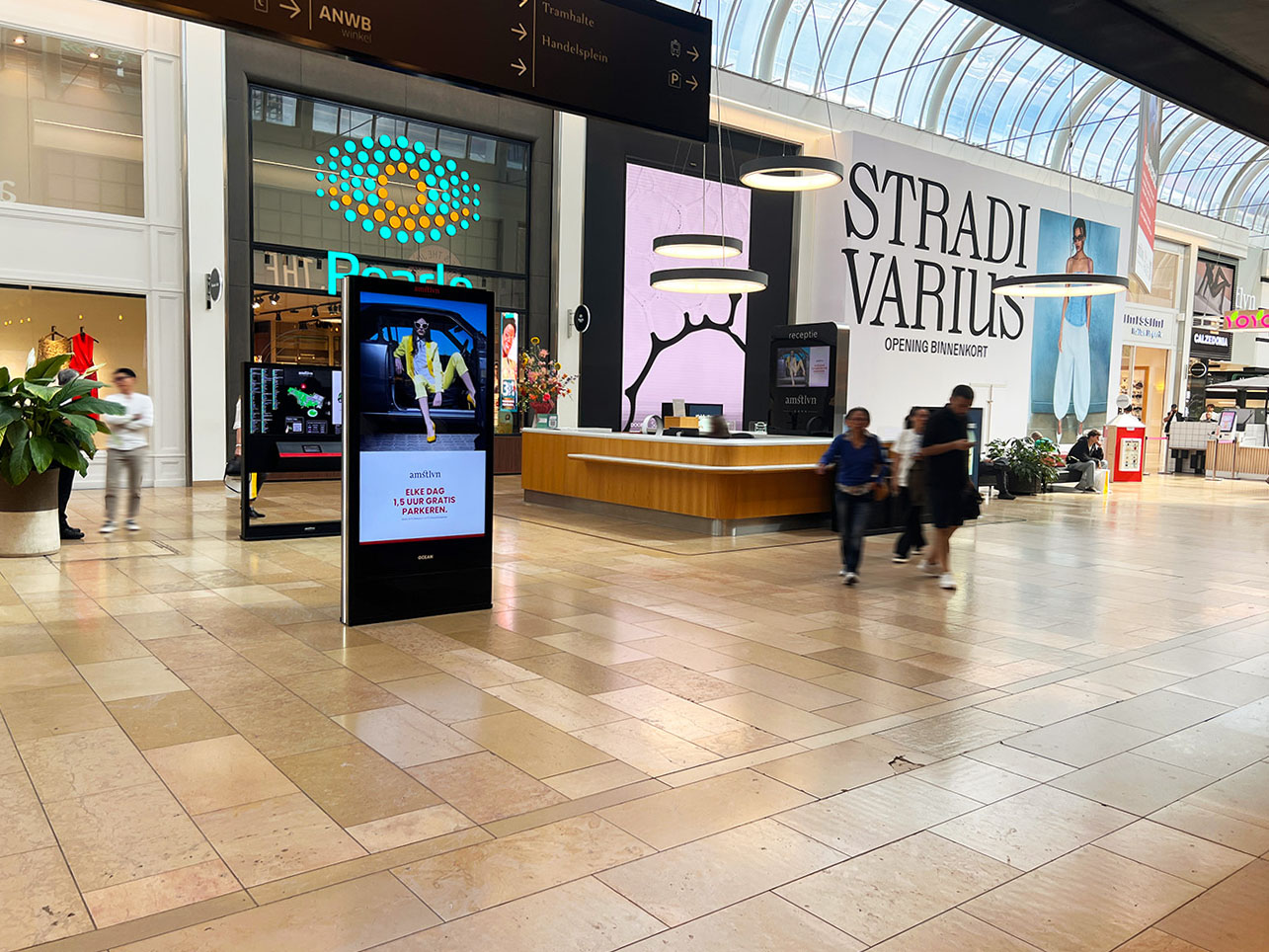
Stadshart Amstelveen
Stadshart Amstelveen
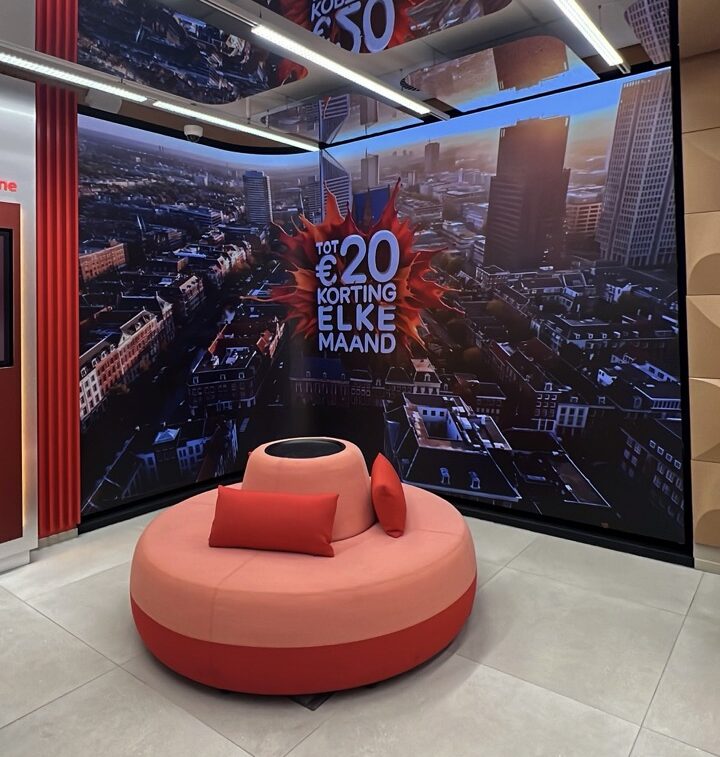
VodafoneZiggo
VodafoneZiggo
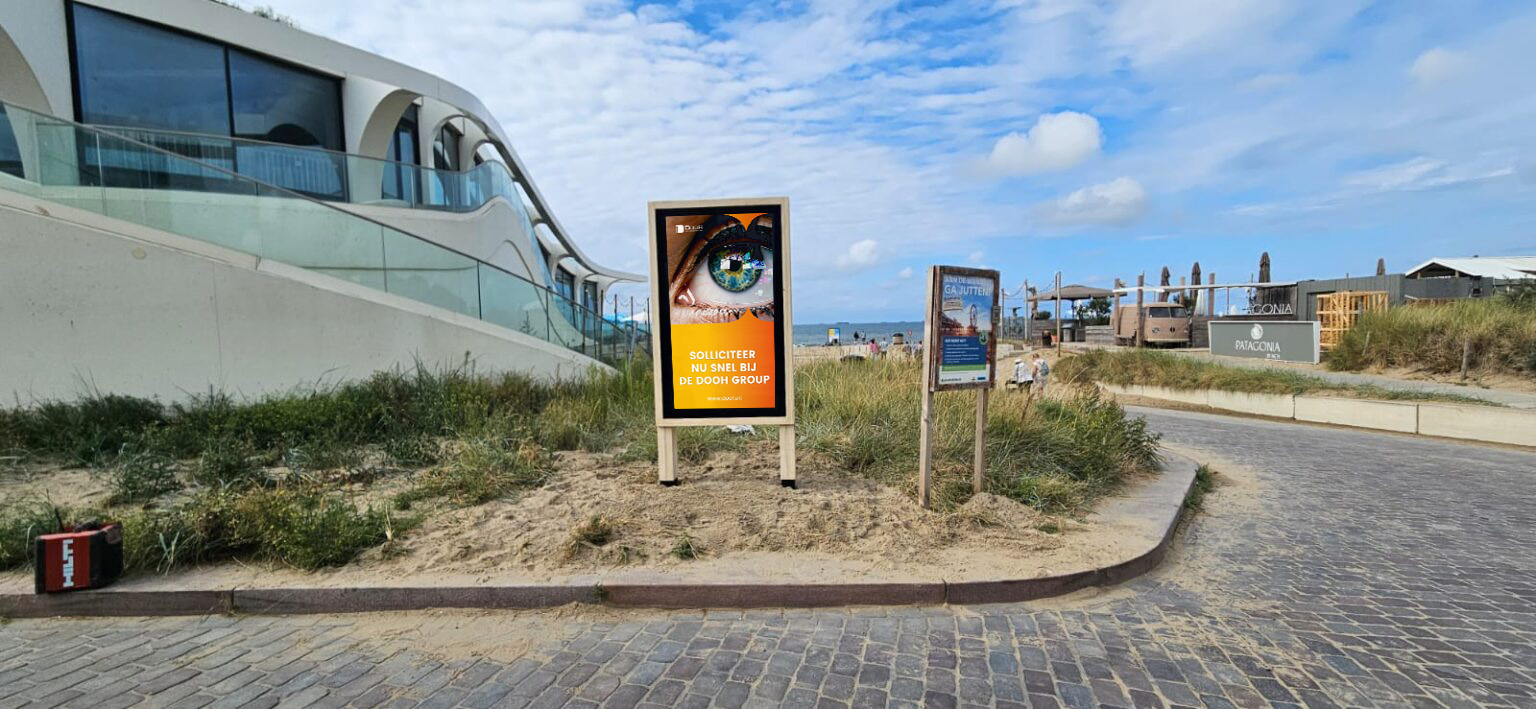
Scheveningen Beach
Scheveningen Beach
OUR FOUNDATION
One integrated stack, not four platforms that almost fit together
The DooH Group infrastructure is not a patchwork. It is a single management standard: one CMS layer, one monitoring platform, one service protocol, deployed identically across NL, BE, and DE.
For an integrator, that means: whether a screen is at a client site in Rotterdam or a rollout project in Munich, it behaves identically and is managed and serviced by exactly the same process.
Self-Healing Platform
Software that automatically detects and resolves common faults, before your client notices. The foundation of the 99.9% uptime SLA.
Safe & Secure Remote Management
Encrypted connections, audit logging and role-based access control, GDPR-compliant. Demonstrable in client tenders.
Single Point of Contact
One party accountable for hardware, software and service. No “that’s the other supplier’s responsibility”, ever.

OUR SOLUTION
What the infrastructure delivers for your clients
DooH Group is Benelux’s most experienced DOOH infrastructure partner, combining Samsung Platinum hardware, the Broadsign ecosystem, and our own 24/7 NOC into a single accountable solution.
Outdoor-Grade Hardware Supply
High-brightness LED and LCD installations rated for 24/7 outdoor operation. 2,500–7,000 nit panels, IP65 enclosures, and anti-vandal glass specified for your environment and climate.
Broadsign & CMS Integration
Certified Broadsign implementation partner. We deploy, configure, and support Broadsign Control, Reach, and Direct at scale, with our own CMS Peach available for operators who want a local-first platform.
24/7 Network Operations Centre
Proactive remote monitoring from our Dutch NOC. We detect, triage, and resolve issues before they breach SLAs, with an average MTTR of under 4 hours for field-dispatch incidents.
Proof-of-Play & analytics
Verified playback reporting, uptime dashboards, and audience data integration for your media clients.
OUR APPROACH
From spec to live network and everything after
We embed as your infrastructure layer so you can focus on clients, campaigns, and growth.
01
Technical discovery
We assess your network topology, existing hardware, CMS requirements, and SLA obligations before recommending any solution.
02
Network architecture
Hardware specification, PoP design, connectivity planning, and CMS/Broadsign architecture, documented and signed off.
03
Staged rollout
Phased installation with pilot sites, acceptance testing, and NOC onboarding before full network deployment. Zero big-bang risk.
04
Network handover
Full documentation, admin access, and NOC integration. Your team is briefed; our team is watching. Proof-of-play active from day one.
05
Ongoing operations
24/7 NOC monitoring, field maintenance SLA, quarterly reviews, and hardware lifecycle management as your network grows.
Infrastructure SLA
Every project, regardless of size, comes with these non-negotiables.
99.9% uptime SLA
24/7 monitoring
Free onboarding
Platform & ecosystem
CMS connects with your existing tools so signage becomes part of your operation, not a silo.
Broadsign
CMS Peach
REST API
Custom integrations
CONTACT
Let’s build your network on a solid foundation
Book a technical call with our OOHA specialists. We’ll review your current infrastructure, SLA requirements, and growth roadmap and tell you honestly what we can deliver.
FREQUENTLY ASKED QUESTIONS
OOHA / Integrators questions answered
CTO / Technical lead
Can we standardise one stack across all our client projects?
Yes. Our homogeneous network standard means one CMS layer, one monitoring platform, and one service protocol, deployed identically across the Netherlands, Belgium, Germany, and Spain. A screen at a client site in Rotterdam behaves exactly like one in a rollout project in Munich, no re-engineering per project.
How do you handle the security requirements in our client tenders?
Our Safe & Secure Remote Management (SSRM) framework provides encrypted device management, audit logging, and role-based access control, GDPR-compliant and demonstrable in tenders. We provide a security whitepaper and data processing agreement for client IT pre-qualification.
Which CMS and programmatic platforms do you support?
We are a certified Broadsign implementation partner and deploy, configure, and support Broadsign Control, Reach, and Direct at scale. Our own CMS Peach is available for operators who want a local-first platform. REST API connectivity and proof-of-play export support programmatic DOOH platforms including Viooh and Hivestack.
COO / Delivery
What happens when a screen fails on a client site?
Our 24/7 Network Operations Centre detects and triages the incident, and our Self-Healing Platform (SHP) resolves common faults automatically, often before your client notices. Field-dispatch incidents follow the response times in your SLA. You stay in control of the client relationship; we handle the infrastructure.
How do you de-risk a large rollout?
With a staged approach: pilot sites, acceptance testing, and NOC onboarding before full network deployment, zero big-bang risk. The process is identical in every country, so a multi-market rollout follows one methodology, not four.
What does handover look like after go-live?
Every project ends the same way: full documentation, admin access, NOC integration, and proof-of-play active from day one. Your team is briefed; our team is watching. The handover format is identical regardless of client or country.
CFO / Finance
Can we get a predictable cost per screen for multi-year contracts?
Yes. We quote a fixed per-screen model covering hardware, installation, management, and service, so you can price client proposals without contingency buffers eroding your margin. Multi-year managed service contracts are structured around this figure.
How do you price managed service SLAs without historical incident data?
We bring the historical data. With 5,000+ screens under management, we know incident frequencies, first-time-fix rates, and remote-resolution ratios per environment type, which is what makes a 99.9% uptime SLA contractually enforceable rather than a marketing figure.
What happens when hardware needs replacing within the contract term?
Lifecycle management is part of the managed service: firmware updates, panel replacements, and performance reporting are included. Hardware-as-a-Service (HaaS) structures are available to spread hardware costs over the contract term and include replacement coverage.
Commercial / Media sales
Can we prove playback to our media clients?
Yes. Verified proof-of-play reporting, uptime dashboards, and audience data integration are standard. All reporting is export-ready for DSPs and media clients, so campaign delivery is demonstrable, not just claimed.
Does the infrastructure support programmatic revenue?
Yes. We connect networks to programmatic DOOH platforms including Broadsign Reach, Viooh, and Hivestack. Unsold inventory can be monetised automatically while you retain full control over what plays on the network.
Can we offer this as our own managed service?
Yes. You own the client relationship; DooH Group operates as your infrastructure layer. SLAs are structured to back the commitments you make to your end clients, so the uptime you promise is the uptime we contractually deliver.
Procurement
Can one contract cover hardware, software, and service?
Yes. One party accountable for the complete picture, under a single SLA. No more three contracts that each point to the others when something fails.
How do we avoid vendor lock-in?
Our homogeneous network standard is software- and service-led rather than tied to one hardware platform. Existing screens from other suppliers can be onboarded into our monitoring and CMS layer, and the Broadsign ecosystem is an open industry standard, not a proprietary dead end.
Do contracts scale cleanly across countries?
Yes. One framework agreement covers the Netherlands, Belgium, Germany, and Spain: one service protocol, one portal, one invoice regardless of country. No re-negotiation per market.
Internal ambassador
How do we answer “why not build it ourselves?”
Building a 24/7 NOC, self-healing tooling, and multi-country field service in-house takes years and a permanent cost base. DooH Group provides it as proven infrastructure with a contractual 99.9% uptime SLA from day one. We also provide the briefing material ( TCO comparison, security documentation, and SLA structure) to make that case internally.
Do you have references from comparable networks?
Yes. We manage screen networks for VodafoneZiggo, Schiphol Airport, and Hoog Catharijne, among others. 5,000+ screens under management across four countries. Reference calls with comparable network operators can be arranged on request.